The 1923 penny value, as usual, depends on more than the date. The coin is a Lincoln Wheat cent struck in bronze, with Philadelphia and San Francisco issues for the year. A normal-worn piece can stay modest. A better example with original surfaces, stronger color, and no damage can move into a much better market position.
The coin itself is simple to identify. It has Lincoln on the obverse and the wheat ears reverse used through 1958. The 1923 cent was struck in 95% copper, with a plain edge and a weight of 3.11 grams. The Philadelphia coin has no mint mark. The 1923-S shows an S below the date. That mint-mark split matters because the San Francisco issue gets much less forgiving once condition problems appear.
Copper coins also need a different kind of reading. A coin identification app can help sort a raw group by date, mint mark, and basic type, but that is only the start. With a 1923 cent, the harder question is not “what coin is this?” It is “what happened to the surface?” That is where value changes.
What the Market Is Really Grading
Many collectors think grade starts and ends with wear. That works for some coins. It works less well for old copper. A 1923 cent can show decent detail and still sell weakly if the surfaces are wrong. The market looks at several things at once:
Wear
Color
Luster
Spots
Cleaning
Corrosion
Overall eye appeal
That is why two coins with similar detail can trade in very different ranges. One may look original and stable. The other may look bright but wrong, dark but rough, or sharp but cleaned. The label grade matters. The market grade matters more.
Color Is a Real Price Factor
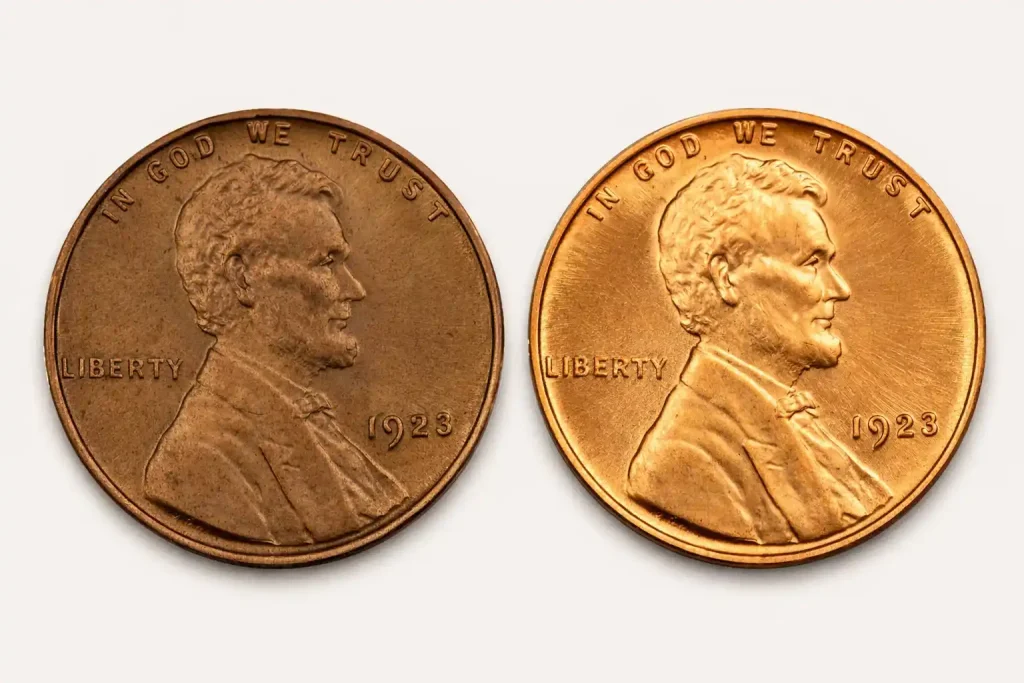
Color is not decoration on a copper coin. It is part of the market language. Collectors separate old cents into three broad groups: Brown, Red Brown, and Red. Those terms do not just describe appearance. They describe how much original mint color remains, and that has a direct effect on demand.
Color
Market Read
Brown
Stable, common, often affordable
Red brown
Better eye appeal, middle range
Red
Strongest premium potential
A Brown coin can still be good. Many old cents live in that category, especially after real circulation. The important question is whether the brown color looks natural and even. A pleasing brown coin with clean, original surfaces can be more attractive than a brighter coin with surface problems.
Red Brown sits in the middle. These coins still show some original mint color, but not enough to call them fully Red. This group often attracts collectors because it can offer a stronger visual appeal without the high premium attached to full Red examples.
Red is where the market gets stricter. A Red 1923 cent, especially a 1923-S, draws more attention because the original bright copper is much harder to preserve over time. That also means the market becomes less tolerant. One spot, one wipe, one dull patch, or one unstable area can hurt the coin more than it would on a Brown piece.
Original Brown Can Be Better Than Bright but Wrong
This is where many raw copper coins get misread. Some owners see a dark cent and assume it would be worth more if it looked brighter. That is often false. Old copper does not need to be bright to be healthy. It needs to look original.
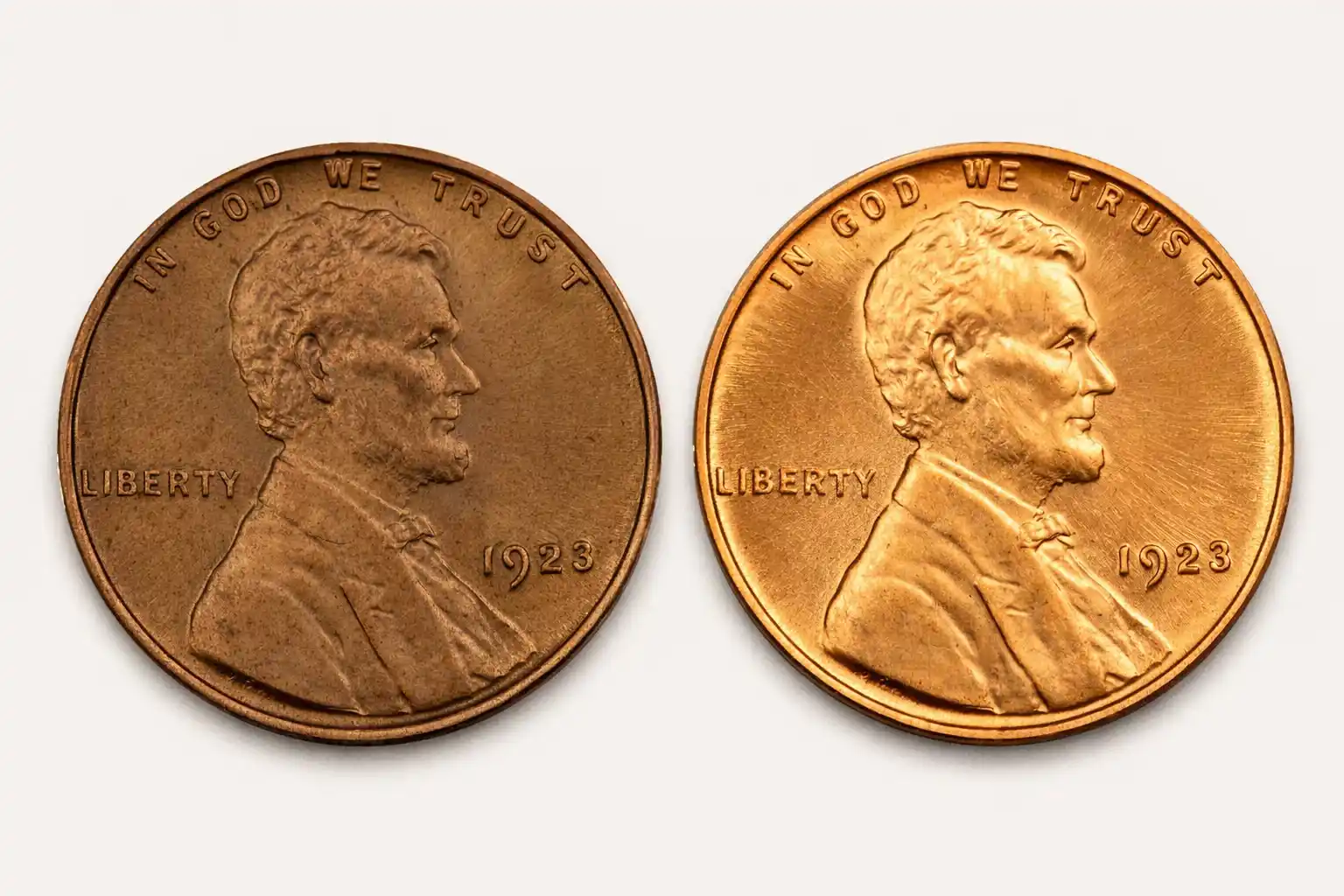
A smooth chocolate-brown or medium-brown 1923 cent can be perfectly acceptable. It can even be desirable if the color is even and the surfaces still show life. By contrast, a coin with unnatural orange brightness, rubbed shine, or pale stripped color may look “improved” at first glance and still get penalized by the market.
The same mistake appears at shows, in online lots, and in inherited collections. Buyers see brightness and think freshness. Experienced collectors often read the same coin as cleaned.
Cleaning Can Lower the Market Grade Fast
Cleaning is one of the biggest value killers for old cents. The problem is not only that cleaning changes the look. The bigger problem is that it breaks trust. Once the surfaces stop looking original, the coin often drops into a weaker market category, even if the details remain strong.
A cleaned 1923 cent may still show solid Fine, Very Fine, or even About Uncirculated detail. That does not mean it will sell like a straight-graded coin in the same detail range. The market usually sees a problem coin, not a premium coin.
Common signs of cleaning include:
Wrong shine
Fine hairlines
Patchy color
Flat fields
Bright high points
Dull areas without natural luster
Harsh cleaning is the easiest case. Scrubbing, polishing, and wiping often leave a lifeless surface. Light old cleaning can be harder to read, but it still changes the way the coin trades. On copper, that matters a lot because surface originality is a major part of collector confidence.
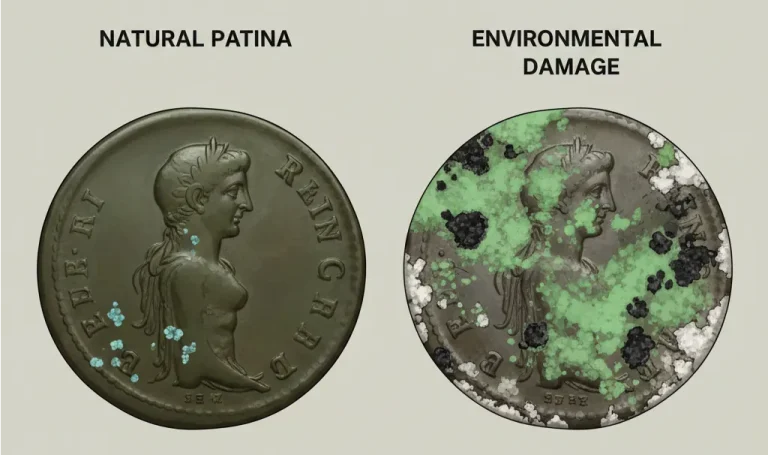
Corrosion Is Worse Than Normal Wear
Wear is expected. Corrosion is different. A worn 1923 cent may still be stable and collectible. A corroded cent carries a different kind of problem. The metal has changed. The surface may still be active. That makes the coin harder to trust and harder to sell.
Corrosion on old copper can show up in several ways:
Green areas
Orange-red roughness
Granular dark patches
Pitted surfaces
Uneven crusty spots
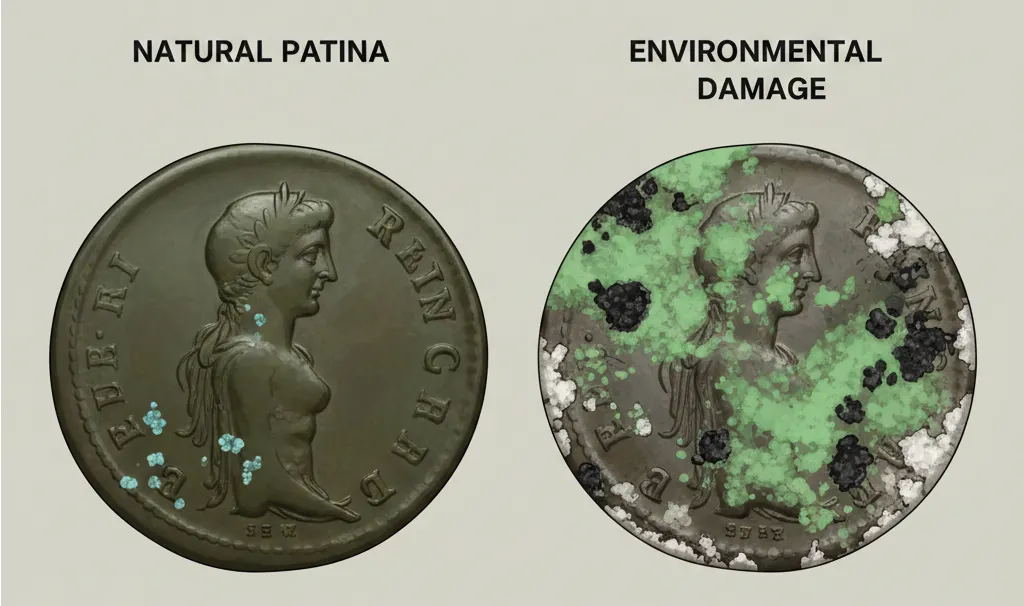
This is where many beginners make the wrong call. They see a dark tone and assume age. Sometimes it is just age. Sometimes it is environmental damage. A smooth dark coin and a rough dark coin do not belong in the same category.
Surface State
Market Effect
Even brown tone
Usually acceptable
Light spotting
Depends on balance
Uneven rough patches
Clear penalty
Active corrosion
Strong penalty
The market can forgive honest wear. It is less forgiving with unstable copper.
Spots and Stains Sit in the Middle
Not every surface issue is full corrosion. Some 1923 cents fall into a middle zone. They are not cleaned hard. They are not badly corroded. They still show dark flecks, carbon spots, stains, or scattered patches that drag down the look.
This middle zone matters because it affects eye appeal without always destroying the coin. A single small spot on a Brown cent may not change much. A Red or Red Brown coin with visible black flecks can lose appeal much faster. The brighter the color, the easier it is to see every defect.
That is why color and surface quality work together. Red gets the premium, but Red also gets judged harder.
Why 1923-S Is Less Forgiving
The 1923-S deserves its own section because it reacts differently in the market. A common Philadelphia 1923 cent can still work as a collector piece in modest grades, especially if it looks natural and problem-free. The 1923-S gets more scrutiny. Buyers expect more. Weak surfaces get punished faster.
That happens for two reasons. The first is date status. The second is preservation difficulty. A better date in copper becomes very sensitive to originality. On a 1923-S, dullness, roughness, spots, and past cleaning stand out more because the coin already carries more numismatic weight.
This does not mean every 1923-S is expensive. It means the margin for error is smaller. A healthy Brown 1923-S can still be attractive. A cleaned or corroded one loses strength quickly. A bright, original Red example is where the big premium logic begins.
How to Read a 1923 Cent Before Judging the Price
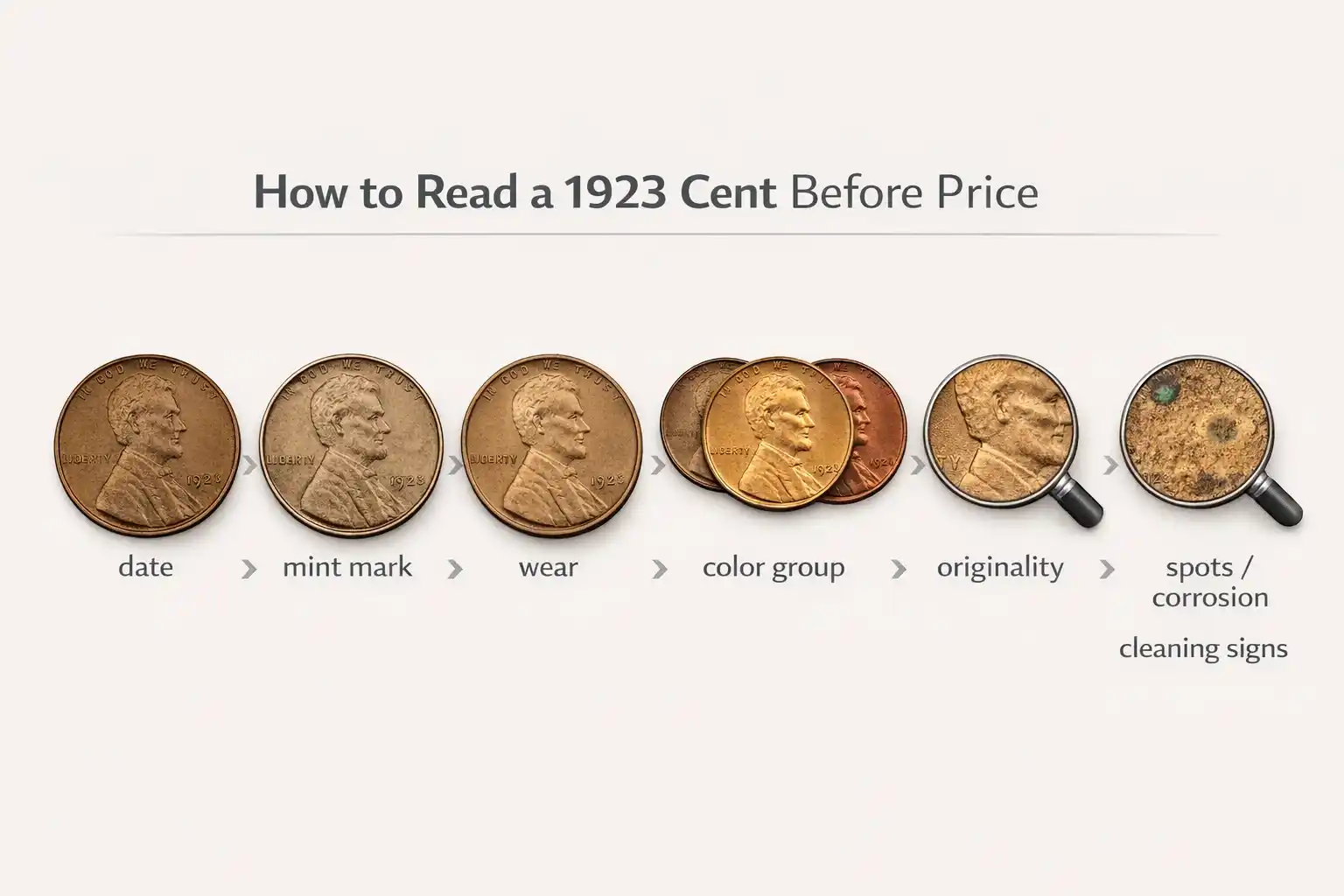
This part should stay simple. Before thinking about price, check the coin in the right order.
Start with these points:
Date
Mint mark
Wear level
Color group
Surface originality
Spots or roughness
Signs of cleaning
That order helps because it keeps the eye from jumping straight to shine or brightness. A coin can look impressive for the wrong reason. It can also look dark and still be better than it seems.
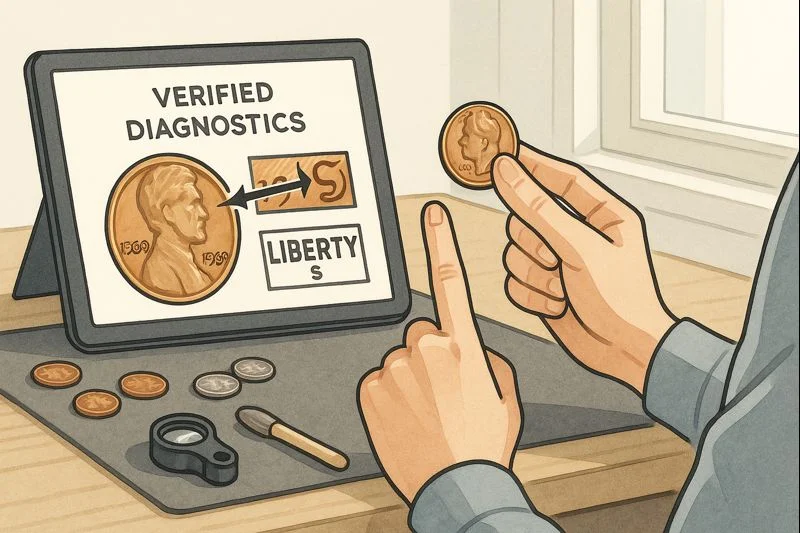
Here, you can also rely on the best free coin identifier app. The point is not to replace judgment. The point is to sort raw cents faster, confirm the basic issue, and keep notes consistent.
Coin ID Scanner works well here because its AI filters help narrow similar matches, its database covers more than 187,000 coins, and its collection management tools make it easier to keep Brown, Red Brown, and Red pieces organized while comparing raw examples.
When a Red Coin Is Not the Better Coin
This is the final point that ties the whole article together. Red color attracts attention. It does not guarantee stronger value by itself. A Red coin with poor surfaces can still disappoint. A Brown coin with original, stable, natural surfaces can be a better collector coin.
That is why the market grade changes so much in 1923 cents. The surface story matters. Cleaning changes trust. Corrosion changes the metal. Color changes demand. Once those factors are read together, the price starts to make sense.
A 1923 cent is not difficult to identify. It is much harder to judge correctly. That is where the real value difference begins.